Why Real Circuits Don't Respond Instantly
In real life, circuits cannot change instantly.
When you flip a switch, voltages and currents don’t jump to their final values — they ease into them over time.
This happens because of components like resistors, capacitors, and inductors that store energy and resist sudden changes.
⚡ The Problem
Imagine flipping a light switch:
- You expect the current to appear instantly.
- But in reality, it ramps up gradually.
- When you turn it off, the current doesn’t vanish immediately either.
This delay is called the transient response.
🔍 Why Does This Happen?
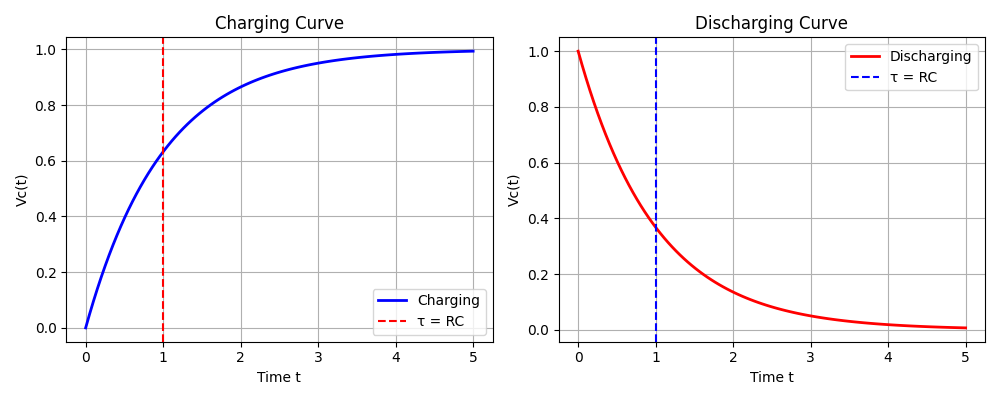
Capacitance
- Capacitors resist changes in voltage.
- Think of them as electric "inertia" — they take time to charge or discharge.
- Even after the source is removed, a charged capacitor keeps holding voltage.
A capacitor is like a water tank: once filled, it takes time to empty, even if you stop pouring.
Inductance
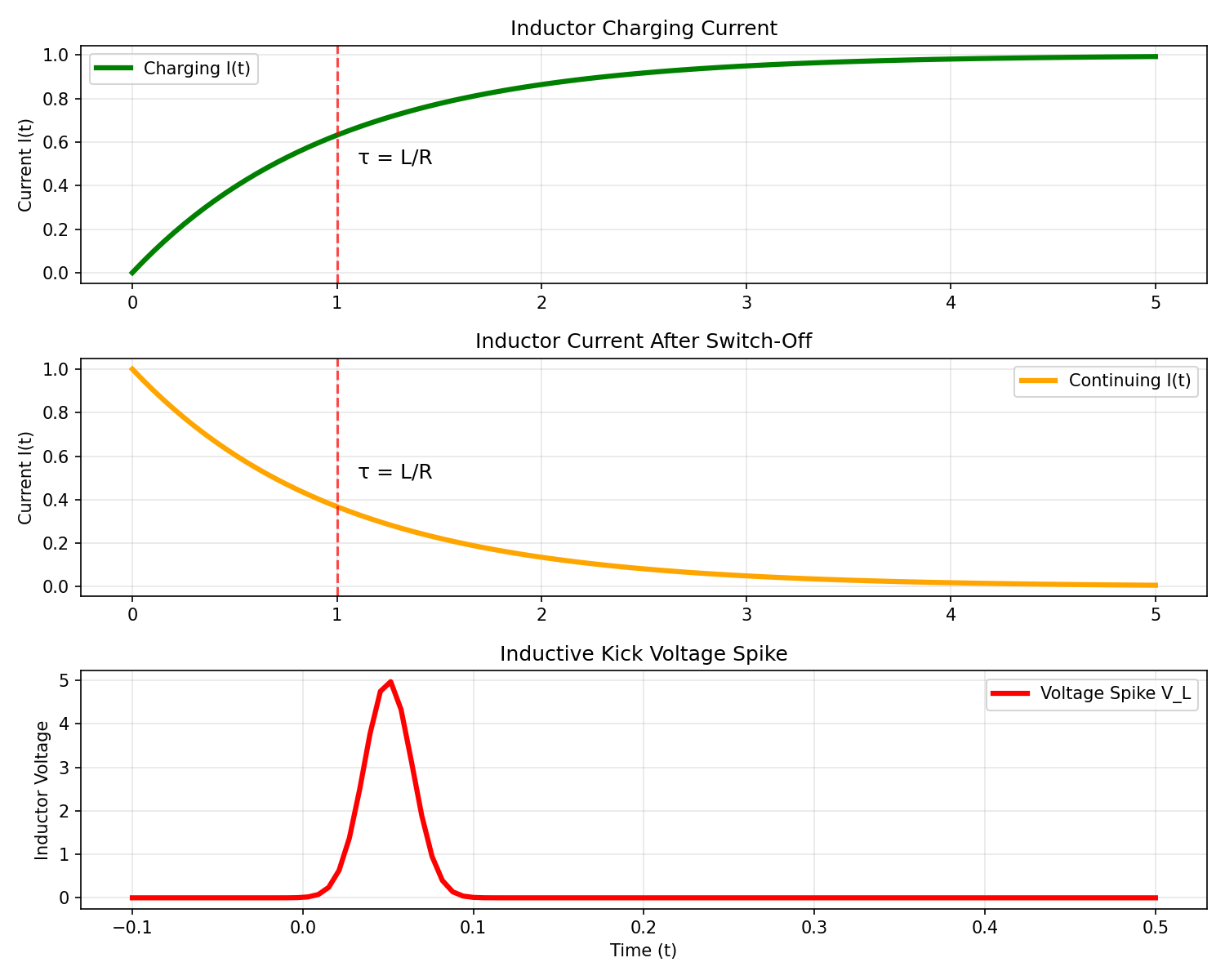
- Inductors resist changes in current.
- Think of them as magnetic "inertia" — current wants to keep flowing.
- When you try to stop current suddenly, inductors can create large voltage spikes.
These voltage spikes can damage sensitive parts like transistors if not controlled!
💡 Real-World Example: LED Circuit
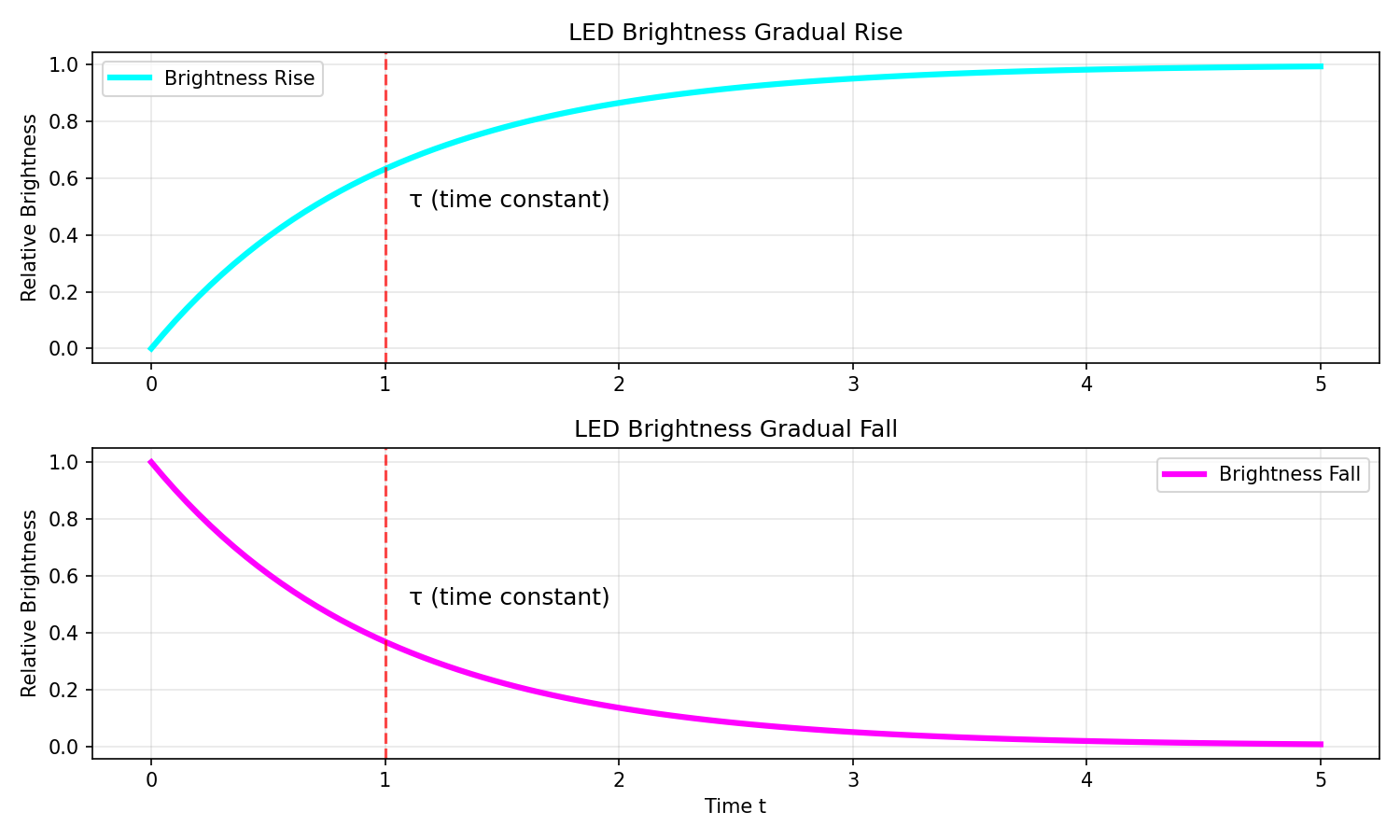
Turning ON an LED:
- Ideal case: LED lights instantly at full brightness.
- Real case: LED brightness rises gradually (milliseconds) due to the RC time constant.
Turning OFF an LED:
- Current doesn’t stop instantly because of inductance.
- This can cause dangerous voltage spikes.
🛠️ How Engineers Handle This
- ✅ Decoupling capacitors near power pins (to smooth voltage changes)
- ✅ Snubber diodes across inductive loads (to absorb voltage spikes)
- ✅ RC filters for stable power delivery
- ✅ Careful design that considers transient response
Safe circuit design isn’t just about steady operation — it’s about managing transitions smoothly.
📚 Summary
Real circuits behave differently from ideal ones because of energy storage in capacitors and inductors.
This makes them respond gradually, not instantly.
By understanding these effects, engineers can design circuits that are both safe and reliable.