Impedance – Combining Resistance and Reactance in AC
In real AC circuits, resistance and reactance never appear alone.
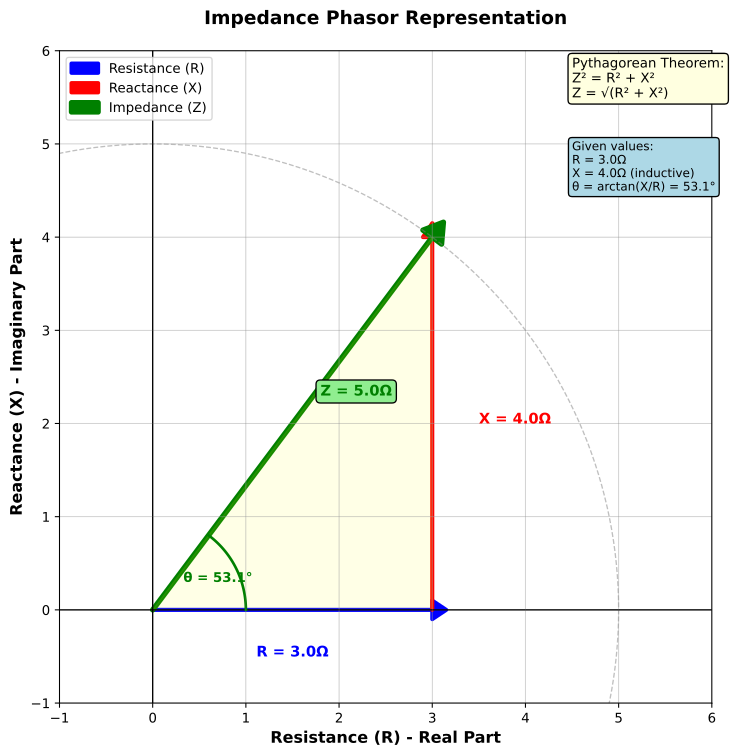
They combine to form impedance (Z) — the total opposition to AC current flow.
Impedance includes:
- Resistance (R) → dissipates energy as heat
- Reactance (X) → stores and releases energy
Impedance is measured in Ohms (Ω), but it is not added like DC resistance.
Impedance Formula
For a circuit with resistance and reactance:
Where:
-
Z = impedance (Ohms)
-
R = resistance (Ohms)
-
X = reactance (Ohms)
Example Calculation
-
Resistance: 100 Ω
-
Inductive reactance: 80 Ω

Why Impedance Matters
Impedance is essential for:
-
Calculating AC current →
-
Designing frequency-selective filters
-
Transmission line and antenna matching
-
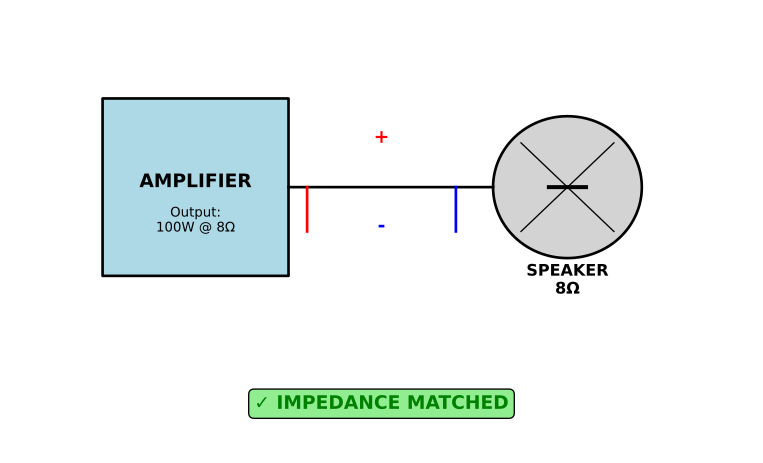
Speaker–amplifier matching
-
Amplifier input and output design
Real-World Example: Audio Systems
Speakers have an impedance (typically 4–8 Ω) that changes with frequency.
If an amplifier is not designed for that load:
-
Sound quality degrades
-
Power delivery drops
-
Amplifier or speaker may overheat
Impedance in Common Circuits
| Circuit Type | Impedance |
|---|---|
| Pure resistor | |
| Pure inductor | |
| Pure capacitor | |
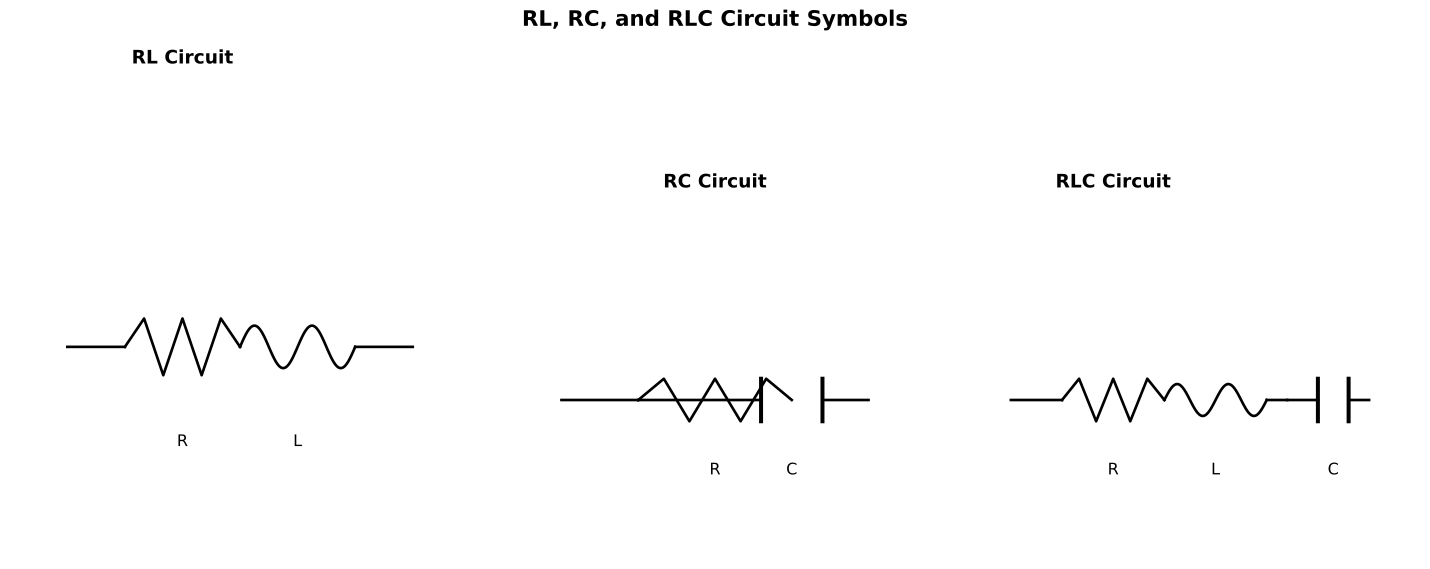
| RL circuit | |
| RC circuit | |
| RLC circuit |
Resonance in RLC Circuits
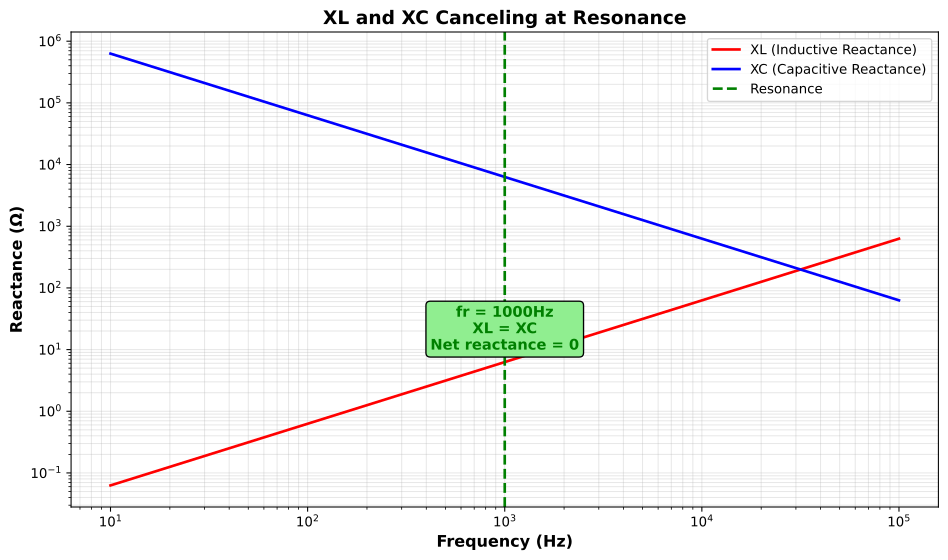
When:
Then:
This condition is called resonance.
At resonance:
-
Impedance is minimum
-
Current is maximum
-
Circuit becomes purely resistive
Key Takeaway
-
It combines resistance and reactance
-
It depends on frequency
-
It explains filters, resonance, signal shaping, and power transfer
Master impedance, and AC circuits stop being mysterious — they become predictable and powerful.